The Benefits of Homeownership
1. Building Equity
One of the most significant benefits of owning a home is building equity. Unlike renting, where your monthly payments go to a landlord, homeownership allows you to build equity over time. As you pay down your mortgage and as property values increase, your equity grows, providing you with financial security and opportunities for future investment.
2. Financial Stability
Fixed-rate mortgages offer predictability. Unlike rent, which can increase annually, a fixed-rate mortgage ensures that your principal and interest payments remain constant over the life of the loan. This stability helps you budget more effectively and protects you from unexpected rent hikes.
3. Tax Benefits
Homeowners can take advantage of several tax deductions. Mortgage interest and property taxes are often deductible, which can reduce your taxable income and lower your tax bill. It's always best to consult with a tax professional to understand the specific benefits of your situation.
4. Personal Freedom
Owning a home gives you the freedom to create the living space you've always dreamed of. Whether it's remodeling the kitchen, painting the walls your favorite color, or landscaping the yard, you have the autonomy to make changes that reflect your personal style and preferences.
5. Community and Stability
Homeownership fosters a sense of community and belonging. Homeowners are more likely to engage with their neighbors, participate in community events, and invest in the local area. This sense of stability can be particularly beneficial for families, providing a stable environment for children to grow and thrive.
6. Long-Term Investment
Real estate has historically been a sound long-term investment. While the market can fluctuate, property values generally appreciate over time. Owning a home can be a critical component of your long-term financial strategy, offering a valuable asset that can be leveraged for future needs.
Why June is the Perfect Time
June is an ideal time to explore homeownership. The weather is perfect for house hunting, and the market is typically more active with a wide variety of homes available. Additionally, moving during the summer months can be more convenient for families with children, minimizing disruption to the school year.
As your trusted real estate agent, I am here to guide you through every step of the home-buying process. From finding the perfect property to navigating financing options, I will work diligently to ensure you have a smooth and successful experience.
Take the First Step
Ready to take the first step towards homeownership? Contact me today to schedule a consultation. Whether you're a first-time homebuyer or looking to upgrade your current home, I am dedicated to helping you achieve your real estate goals.
Homeownership is more than just having a place to call your own; it's about building a future, creating memories, and achieving financial stability. This June let's celebrate Homeownership Month by making your dream of owning a home a reality. Reach out to me today, and let's start this exciting journey together.
According to recent data from Fannie Mae, almost 1 in 4 people still think home prices are going to come down. If you’re one of the people worried about that, here’s what you need to know.
A lot of that fear is probably coming from what you’re hearing in the media or reading online. But here’s the thing to remember. Negative news sells. That means, you may not be getting the full picture. You may only be getting the clickbait version. As Jay Thompson, a Real Estate Industry Consultant, explains:
“Housing market headlines are everywhere. Many are quite sensational, ending with exclamation points or predicting impending doom for the industry. Clickbait, the sensationalizing of headlines and content, has been an issue since the dawn of the internet, and housing news is not immune to it.”
Here’s a look at the data to set the record straight.
Case-Shiller releases a report each month on the percent of monthly home price changes. If you look at their data from January 2023 through the latest numbers available, here’s what you’d see:
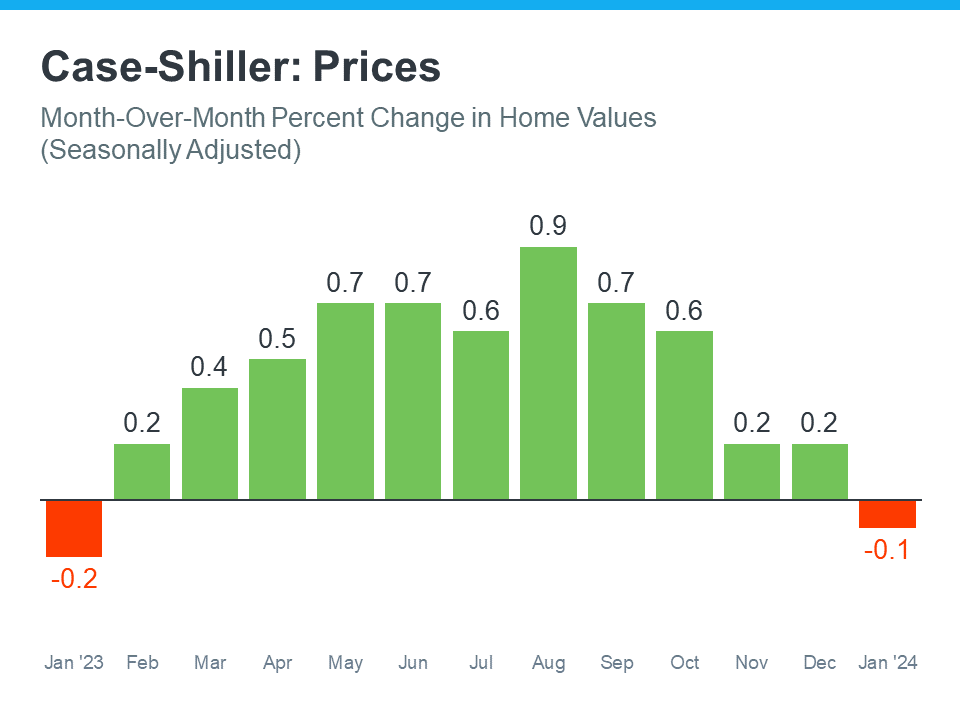
What do you notice when you look at this graph? It depends on what color you’re more drawn to. If you look at the green, you’ll see home prices rose for the majority of the past year.
But, if you’re drawn to the red, you may only focus on the two slight declines. This is what a lot of media coverage does. Since negative news sells, drawing attention to these slight dips happens often. But that loses sight of the bigger picture.
Here’s what this data really says. There’s a lot more green in that graph than red. And even for the two red bars, they’re so slight, they’re practically flat. If you look at the year as a whole, home prices still rose overall.
It’s perfectly normal in the housing market for home price growth to slow down in the winter. That’s because fewer people move during the holidays and at the start of the year, so there’s not as much upward pressure on home prices during that time. That’s why, even the green bars toward the end of the year show smaller price gains.
To sum all that up, the source for that data in the graph above, Case Shiller, explains it like this:
“Month-over-month numbers were relatively flat, . . . However, the annual growth was more significant for both indices, rising 7.4 percent and 6.6 percent, respectively.”
If one of the expert organizations tracking home price trends says the very slight dips are nothing to worry about, why be concerned? Even Case-Shiller is drawing your attention to how those were virtually flat and how home prices actually grew over the year.
The data shows that, as a whole, home prices rose over the past year. If you have questions about what’s happening with home prices in our area, let's chat.
Before making the decision to buy a home, it's important to plan for all the costs you’ll be responsible for. While you're busy saving for the down payment, don't forget you’ll want to prep for closing costs too.
Here’s some helpful information on what those costs are and how much you should budget for them.
A recent article from Bankrate explains:
“Closing costs are the fees and expenses you must pay before becoming the legal owner of a house, condo or townhome . . . Closing costs vary depending on the purchase price of the home and how it’s being financed . . .”
Simply put, your closing costs are the additional fees and payments you have to make at closing. According to Freddie Mac, while they can vary by location and situation, closing costs typically include:
According to the same Freddie Mac article mentioned above, they’re typically between 2% and 5% of the total purchase price of your home. With that in mind, here’s how you can get an idea of what you’ll need to budget.
Let’s say you find a home you want to purchase at today’s median price of $384,500. Based on the 2-5% Freddie Mac estimate, your closing fees could be between roughly $7,690 and $19,225.
But keep in mind, if you’re in the market for a home above or below this price range, your closing costs will be higher or lower.
Freddie Mac provides great advice for homebuyers, saying:
“As you start your homebuying journey, take the time to get a sense of all costs involved – from your down payment to closing costs.”
The best way to do that is by partnering with a team of trusted real estate professionals. That gives you a group of experts to help you understand how much you’ll need to save and what you’ll want to be prepped for. It also means you have go-to resources for any questions that pop up along the way.
Planning for the fees and payments you'll need to cover when you're closing on your home is important. Partnering with a local real estate professional can give you the guidance and confidence you need throughout the process.
Wondering if it still makes sense to sell your house right now? The short answer is, yes. And if you look at the current number of homes for sale, you’ll see two reasons why.
An article from Calculated Risk shows there are 15.6% more homes for sale now compared to the same week last year. That tells us inventory has grown. But going back to 2019, the last normal year in the housing market, there are nearly 40% fewer homes available now:
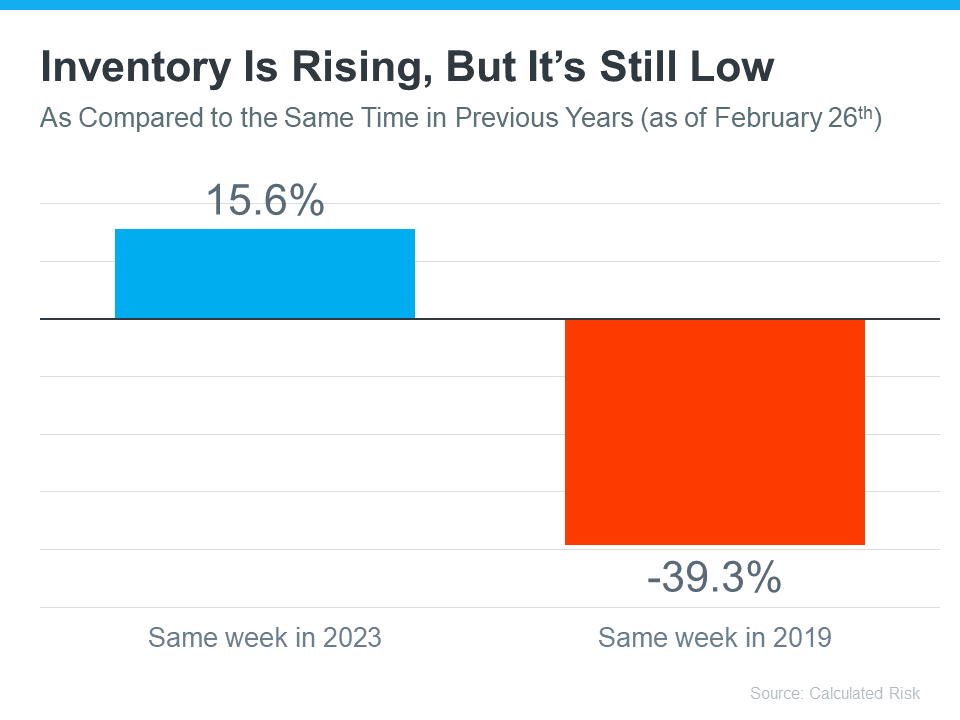
Here’s a breakdown of how this benefits you when you sell.
Are you thinking about selling because your current house is too big, too small, or because your needs have changed? If so, the year-over-year growth gives you more options for your home search. That means it may be less of a challenge to find what you’re looking for.
So, if you were holding off on selling because you were worried you weren’t going to find a home you like, this may be just the good news you needed. Partnering with a local real estate professional can help you make sure you’re up to date on the homes available in your area.
But to put that into perspective, even though there are more homes for sale now, there still aren’t as many as there’d be in a normal year. Remember, the data from Calculated Risk shows we’re down nearly 40% compared to 2019. And that large deficit won't be solved overnight. As a recent article from Realtor.com explains:
“. . . the number of homes for sale and new listing activity continues to improve compared to last year. However the inventory of homes for sale still has a long journey back to pre-pandemic levels.”
For you, that means if you work with an agent to price your house right, it should still get a lot of attention from eager buyers and could sell fast.
If you're a homeowner looking to sell, now's a good time. You'll have more options when buying your next home, and there's still not a ton of competition from other sellers. If you’re ready to move, let’s connect to get the ball rolling.
Have you ever heard the term “Silver Tsunami” and wondered what it's all about? If so, that might be because there’s been a lot of talk about it online recently. Let's dive into what it is and why it won't drastically impact the housing market.
A recent article from HousingWire calls it:
“. . . a colloquialism referring to aging Americans changing their housing arrangements to accommodate aging . . .”
The thought is that as baby boomers grow older, a significant number will start downsizing their homes. Considering how large that generation is, if these moves happened in a big wave, it would affect the housing market by causing a significant uptick in the number of larger homes for sale. That influx of homes coming onto the market would impact the balance of supply and demand and more.
The concept makes sense in theory, but will it happen? And if so, when?
Experts say, so far, a silver tsunami hasn’t happened – and it probably won't anytime soon. According to that same article from HousingWire:
“. . . the silver tsunami’s transformative potential for the U.S. housing market has not yet materialized in any meaningful way, and few expect it to anytime soon.”
Here’s just one reason why. Many baby boomers don’t want to move. Data from the AARP shows over half of the surveyed adults ages 65 and up plan to stay put and age in place in their current home rather than move (see chart below):
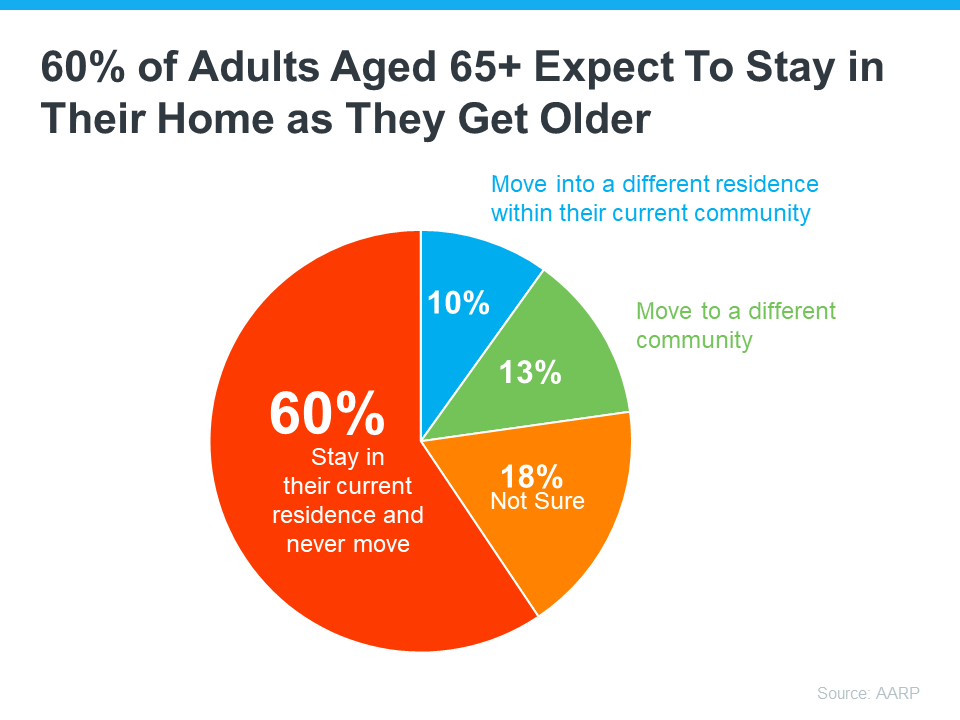
Clearly, not every baby boomer is planning to sell or move – and even those who do won’t do it all at once. Instead, it will be more gradual, happening slowly over time. As Mark Fleming, Chief Economist at First American, says:
“Demographics are never a tsunami. The baby boomer generation is almost two decades of births. That means they're going to take about two decades to work their way through.”
If you’re worried about a Silver Tsunami shaking up the housing market, don’t be. Any impact from baby boomers moving will be gradual over many years. Fleming sums it up best:
“Demographic trends, they don't tsunami. They trickle.”
When you read about the housing market, you’ll probably come across some information about inflation or recent decisions made by the Federal Reserve (the Fed). But how do those two things impact you and your homebuying plans? Here's what you need to know.
One of the Fed’s primary goals is to lower inflation. In order to do that, they started raising the Federal Funds Rate to slow down the economy. Even though this doesn’t directly dictate what happens with mortgage rates, it does have an impact.
Recently inflation has started to cool, a signal those increases worked and are bringing inflation back down. As a result, the Fed’s hikes have gotten smaller and less frequent. In fact, there haven’t been any increases since July (see graph below):
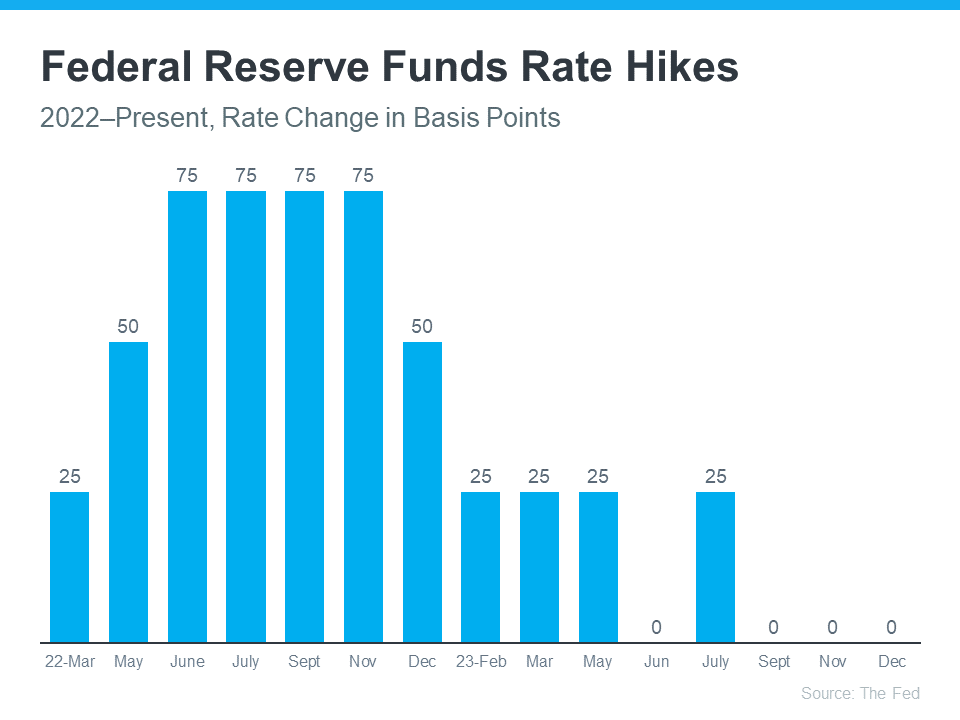
And not only has the Fed decided not to raise the Federal Funds Rate the last three times the committee met, they’ve signaled there may actually be rate cuts coming in 2024. According to the New York Times (NYT):
“Federal Reserve officials left interest rates unchanged in their final policy decision of 2023 and forecast that they will cut borrowing costs three times in the coming year, a sign that the central bank is shifting toward the next phase in its fight against rapid inflation.”
This indicates the Fed thinks the economy and inflation are improving. Why does that matter to you and your plans to buy a home? It could end up leading to lower mortgage rates and improved affordability.
Mortgage rates are influenced by a wide variety of factors, and inflation and the Fed’s actions (or as has been the case recently, inaction) play a big role. Now that the Fed has paused the increases, it looks more likely mortgage rates will continue their downward trend (see graph below):
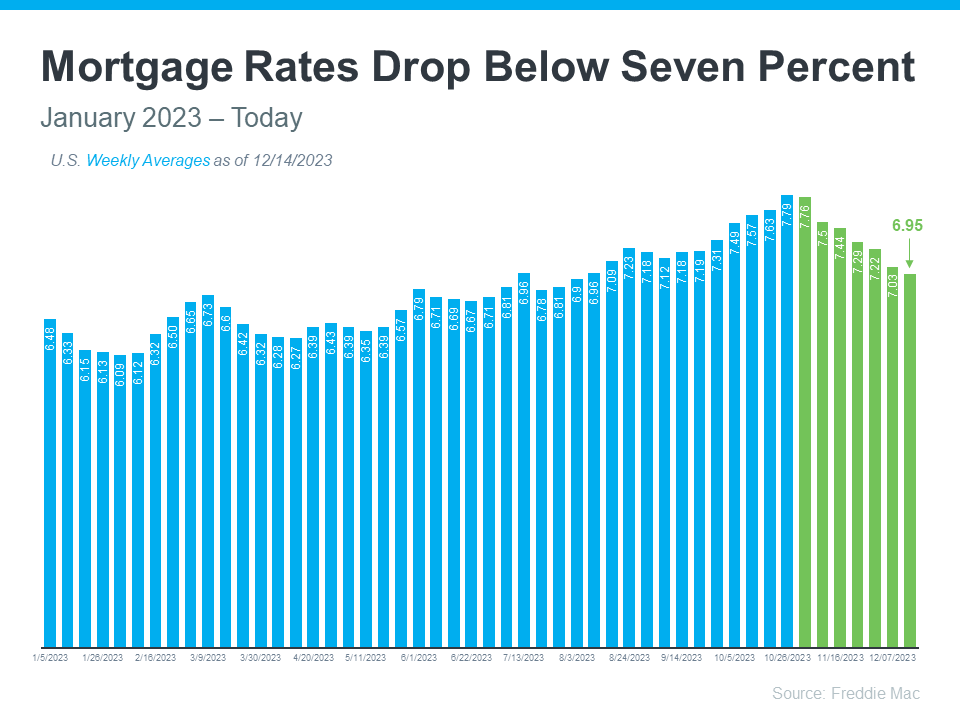
Although mortgage rates may remain volatile, their recent trend combined with expert forecasts indicate they could continue to go down in 2024. That would improve affordability for buyers and make it easier for sellers to move since they won’t feel as locked-in to their current, low mortgage rate.
The Fed’s decisions have an indirect impact on mortgage rates. By not raising the Federal Funds Rate, mortgage rates are likely to continue declining. Let’s connect so you have expert advice about changes in the housing market and how they affect you.
The new year is right around the corner, and you might be wondering if 2024 will be the right time to buy or sell a home. If you want to make the most informed decision possible, it’s important to know what the experts have to say about what's ahead for the housing market. Spoiler alert: the projections may be better than you think. Here’s why.
Take a look at the latest home price forecasts from Fannie Mae, the Mortgage Bankers Association (MBA), and the National Association of Realtors (NAR):
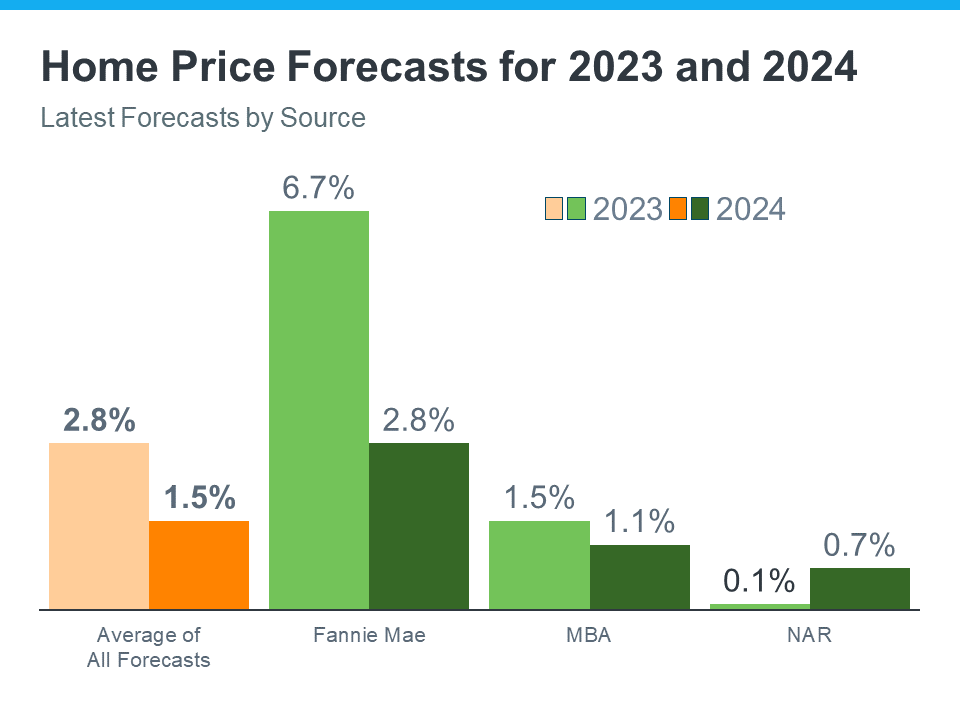
As you can see in the orange bars on the left, on average, experts forecast prices will end this year up about 2.8% overall, and increase by another 1.5% by the end of 2024. That’s big news, considering so many people thought prices would crash this year. The truth is, prices didn’t come tumbling way down in 2023, and that’s because there just weren’t enough homes for sale compared to the number of people who wanted or needed to buy them, and that inventory crunch is still very real. This is the general rule of supply and demand, and it continues to put upward pressure on prices as we move into the new year.
Looking forward, experts project home prices will continue to rise next year, but not quite as much as they did this year. Even though the expected rise in 2024 isn't as big as in 2023, it's important to understand home price appreciation is cumulative. In simpler terms, this means if the experts are right, according to the national average, after your home's value goes up by 2.8% this year, it should go up by another 1.5% next year. That ongoing price growth is a big part of why owning a home can be a smart decision in the long run.
While 2023 hasn’t seen a lot of home sales relative to more normal years in the housing market, experts are forecasting a bit more activity next year. Here’s what those same three organizations project for the rest of this year, and in 2024 (see graph below):

While expectations are for just a slight uptick in total sales, improved activity next year is a good thing for the housing market, and for buyers and sellers like you. As people continue to move, that opens up options for hopeful buyers who are looking for a home.
So, what do these forecasts show? The housing market is expected to be more active in 2024. That may be in part because there will always be people who need to move. People will get new jobs, have children, get married or divorced – these and other major life changes lead people to move regardless of housing market conditions. That will remain true next year, and for years to come. And if mortgage rates come down, we’ll see even more activity in the housing market.
If you’re thinking about buying or selling, it’s important to know what the experts are forecasting for the future of the housing market. When you’re in the know about what’s ahead, you can make the most informed decision possible. Let's chat about the latest forecasts together, and craft a plan for your next move.
The idea of owning a home has always been a big part of the American Dream. It's a symbol of stability, independence, and having a place to truly call your own. But for Gen Z, the "Zoomers" born between 1997 and 2012, making that dream a reality can feel like quite the challenge today with higher mortgage rates and rising home prices.
But achieving that goal of owning your first home can still be attainable, even today, with some strategic planning and resourcefulness.
With prices rising all around you, it can be hard to save up for a home. If you've been struggling to stash away enough cash for that down payment, it’s worth it to look into the various down payment assistance programs available. These programs can really help you save big on the upfront costs of buying a home.
There are a lot more options out there than you may realize. According to Down Payment Resource, there are over 2,000 programs designed to help hopeful homebuyers with down payments and closing costs.
If you qualify for one of these programs, you may not need to save up as much money for your down payment. A local real estate agent can help you explore these programs in your area, making it much easier to turn your homeownership dream into a reality.
If you still need a bit more time to save, even with the down payment assistance programs out there, there are ways you can make that happen. Many savvy Zoomers have made a strategic choice to live with relatives so they can get to their savings goals even faster.
According to the National Association of Realtors (NAR), around 30% of Gen Z homebuyers transition directly from their relative’s home to a home of their own.
By sharing living costs, such as mortgage payments, utility bills, and even grocery expenses, you can substantially reduce your monthly expenses. This frees up more of your income to tackle any outstanding debt, boost your credit score, and reach your down payment target in less time. And, all of this can bring homeownership one step closer to becoming a reality. Clare Trapasso, Executive News Editor at Realtor.com, explains:
“Faced with ongoing housing affordability issues . . . we're seeing parents and children becoming roommates again in later years as the 'kids' save up to purchase their own place . . ."
When you're on the path to becoming a homeowner, it's a good idea to get some help along the way. And one of your best resources on this journey as a young homebuyer is a trusted real estate agent. They'll steer you through the process of buying a home and help you find one you can afford.
For Gen Z, the path to homeownership may not be straightforward, but it's still within reach. With the right strategies, you can turn your dream of owning a home into a reality.
If you’re thinking of making a move, one of the biggest questions you have right now is probably: what’s happening with home prices? Despite what you may be hearing in the news, nationally, home prices aren’t falling. It’s just that price growth is beginning to normalize. Here’s the context you need to really understand that trend.
In the housing market, there are predictable ebbs and flows that happen each year. It’s called seasonality. Spring is the peak homebuying season when the market is most active. That activity is typically still strong in the summer but begins to wane as the cooler months approach. Home prices follow along with seasonality because prices appreciate most when something is in high demand.
That’s why there’s a reliable long-term home price trend. The graph below uses data from Case-Shiller to show typical monthly home price movement from 1973 through 2022 (not adjusted, so you can see the seasonality):

As the data shows, at the beginning of the year, home prices grow, but not as much as they do in the spring and summer markets. That’s because the market is less active in January and February since fewer people move in the cooler months. As the market transitions into the peak homebuying season in the spring, activity ramps up, and home prices go up a lot more in response. Then, as fall and winter approach, activity eases again. Price growth slows, but still typically appreciates.
After several unusual ‘unicorn’ years, today’s higher mortgage rates helped usher in the first signs of the return of seasonality. As Selma Hepp, Chief Economist at CoreLogic, explains:
“High mortgage rates have slowed additional price surges, with monthly increases returning to regular seasonal averages. In other words, home prices are still growing but are in line with historic seasonal expectations.”
In the coming months, you’re going to see the media talk more about home prices. In their coverage, you’ll likely see industry terms like these:
Don’t let the terminology confuse you or let any misleading headlines cause any unnecessary fear. The rapid pace of home price growth the market saw in recent years was unsustainable. It had to slow down at some point and that’s what we’re starting to see – deceleration of appreciation, not depreciation.
Remember, it’s normal to see home price growth slow down as the year goes on. And that definitely doesn’t mean home prices are falling. They’re just rising at a more moderate pace.
While the headlines are generating fear and confusion about what’s happening with home prices, the truth is simple. Home price appreciation is returning to normal seasonality. If you have questions about what’s happening with prices in our local area, let’s connect.
Generation Z (Gen Z) is eager to put down their own roots and achieve financial independence. As a result, they’re turning to homeownership. According to the latest Home Buyers and Sellers Generational Trends Report from the National Association of Realtors (NAR), 30% of Gen Z buyers transitioned straight from living under their parents' roofs to owning their own homes.
If you’re a member of this generation, and you’re interested in pursuing your own dream of homeownership, here’s some information you may find helpful on why and where your peers are buying.
A recent survey by Rocket Mortgage identifies some of the top motivators driving Gen Z buyers to purchase a home:
“Of those surveyed, 34% said that starting or growing their family was their main motivation to buy a home. . . . Along with growing a family comes establishing a home base.”
Another key reason the survey says Gen Z wants to buy is because homeownership can give them more stability (20.8%). That’s because buying a home allows you to stabilize what’s typically your biggest monthly expense: your housing cost.
When you have a fixed-rate mortgage on your home, you can lock in your monthly payment for the duration of your loan, often 15 to 30 years. If you keep renting, you don’t have that same benefit, and you won’t be protected from rising housing costs.
So, if you’re ready to start a new chapter in your life or if you’re craving more stability, know that your peers feel the same way, and those motivators are why they’re turning to homeownership.
If those reasons have you feeling ready to buy, here’s some information on where your peers are finding their homes that could help you with your search. According to a recent Lending Tree survey, Gen Z buyers are focusing on more affordable areas to help boost their buying power and offset the challenges that come with today’s mortgage rates.
Many Gen Z buyers still want the convenience and excitement of city life, but also value the affordability, open air, and space more suburban areas offer. Jacob Channel, Senior Economist at LendingTree, explains:
“. . . they want to live in a city, but they also want to be close to nature.”
Locating a home that offers both of those things requires expertise. Working with a trusted real estate professional can help you find a home in your budget and desired area. Your agent will know the most affordable neighborhoods to search in. They can also highlight the amenities and features that location offers and how those are aligned with your goals. They’ll also be able to walk you through how things like remote work can help you cast a broader net for your search.
If you’re a member of Gen Z and are just getting started on your homebuying journey, or if you want to learn more about the process, let’s connect. That way, you have a guide to help you find a home that fits both your lifestyle and your budget.
